

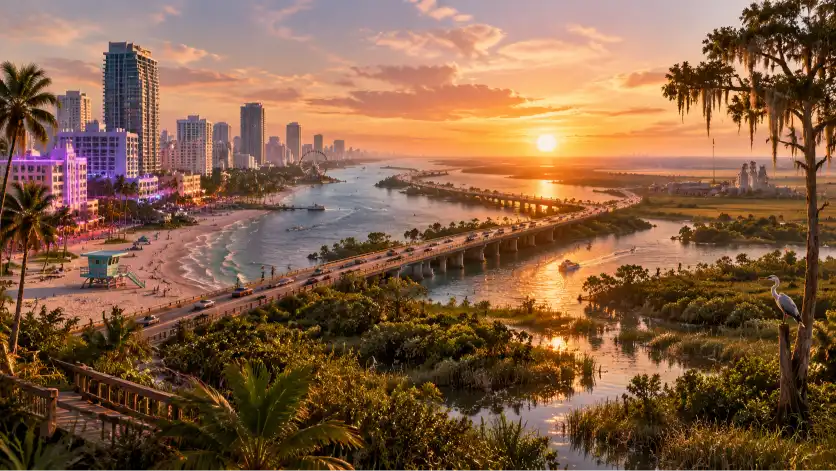
Florida is a place of contrasts. One moment, its identity is defined by a busy coastal city, bright hotels and streets built around tourism. Travel further and the scenery changes: islands stretch into the sea, wetlands spread across the landscape, and agricultural land sits alongside industrial facilities and smaller communities.
That variety is a big part of what makes the real state so interesting. It is also what makes Rockstar Games’ fictional Leonida worth looking at more closely.
In Grand Theft Auto VI, Leonida is more than a backdrop for Vice City. Rockstar’s official material introduces a wider collection of places, including the Leonida Keys, Grassrivers, Port Gellhorn, Ambrosia and Mount Kalaga National Park. Together, they suggest a fictional state with different landscapes, communities and identities.
The connection with Florida is clear at a broad level. Vice City recalls Miami, the Leonida Keys invite comparison with the Florida Keys, and Grassrivers brings to mind the wetlands of the Everglades. Other regions suggest different sides of Florida’s coastal, agricultural and natural environments.
But recognising a resemblance is not the same as identifying an exact real-world location.
A fictional street can share the architecture and atmosphere of a real one without being a direct copy. A fictional wetland can draw on the ecology of a real national park without reproducing its geography. And a game’s map can combine elements from several places to create something that works as a believable world.
That distinction matters. Rather than treating Leonida as a hidden map of Florida, I want to explore what its similarities reveal about Rockstar’s approach to building a fictional place — and why understanding the real geography makes the game world even more interesting.
Enjoy exploring the real-world side of video games? Subscribe to The Gaming Brief — your daily connection to the world of video games, including stories, discoveries and ideas worth exploring.
Is GTA 6’s Leonida based on Florida?
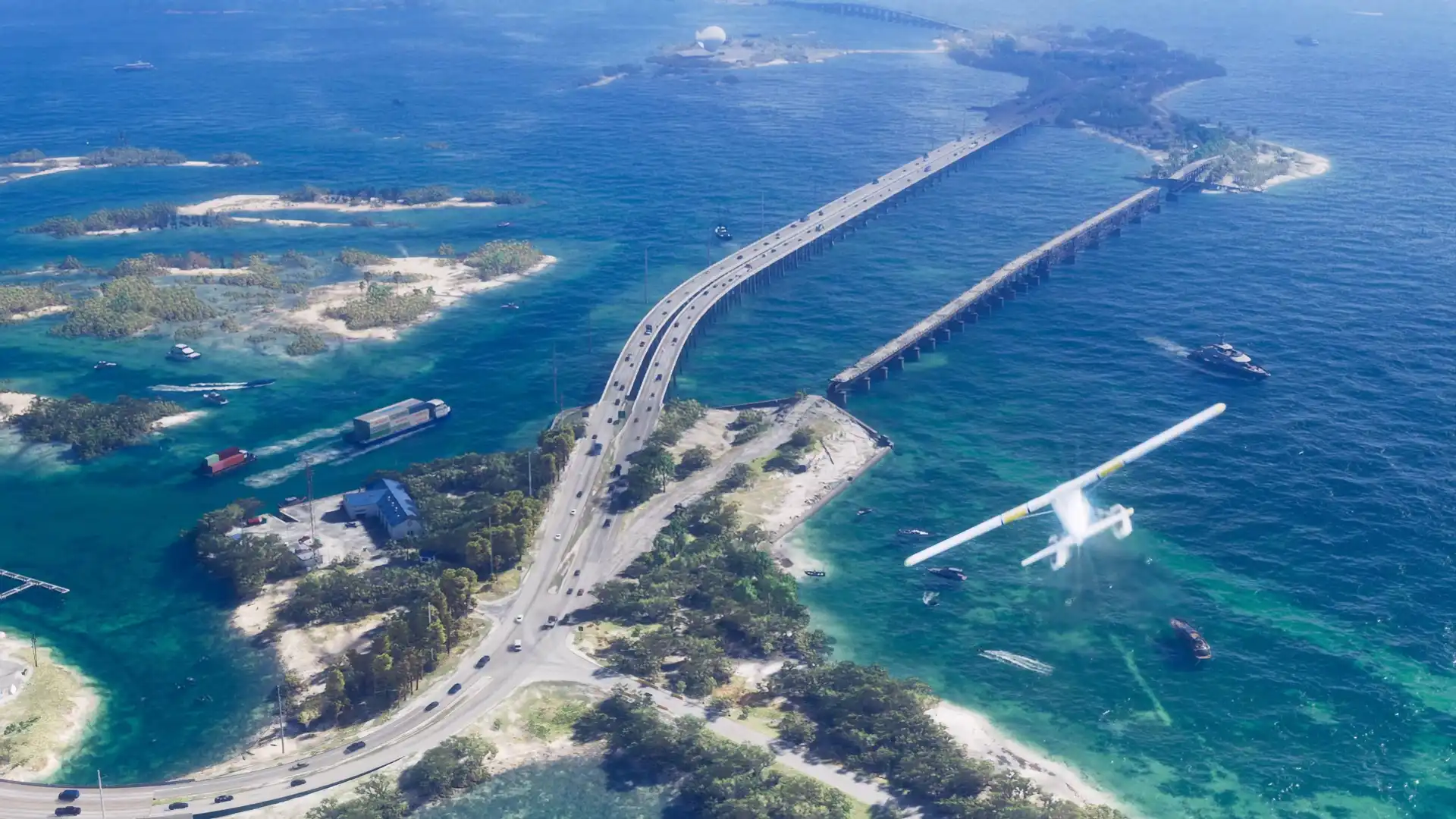
The broad answer is yes: Leonida is Rockstar’s fictional version of a sun-soaked American state, and its official presentation makes the Florida connection unmistakable. However, that does not mean every part of Leonida has a confirmed one-to-one equivalent in the real world.
Rockstar’s Only in Leonida website introduces six major destinations:
- Vice City
- Leonida Keys
- Grassrivers
- Port Gellhorn
- Ambrosia
- Mount Kalaga National Park
The official site presents these as places to explore within the fictional state, alongside characters and other glimpses of its world. Its wider description calls Leonida home to the neon-soaked streets of Vice City and beyond.
This is an important starting point because it establishes that Rockstar wants players to think beyond one city. Vice City may be the most immediately recognisable location, but the state around it is part of the setting’s identity.
Florida provides a natural real-world reference. According to the Florida Department of State, the state has approximately 1,350 miles of coastline, around 4,500 islands larger than ten acres, and a geographical range that stretches from the northern part of the peninsula to Key West. Its natural environments include coastlines, lakes, wetlands and other landscapes.
That geographical variety gives Rockstar plenty of real-world material to reinterpret.
There is an important limit, though. Rockstar has not published a definitive geographical guide identifying every real-world counterpart to every fictional location. The existence of a Florida-like environment does not prove that a particular town, road, building or park inspired it.
For this article, I use four levels of confidence:
- Official information: Rockstar explicitly names or describes something.
- Strong broad comparison: The real-world relationship is clear at a regional or environmental level.
- Visual or thematic interpretation: The resemblance is reasonable, but the precise inspiration is unconfirmed.
- Unknown: The available evidence does not justify a conclusion.
Keeping these distinctions clear makes the comparisons more useful — and avoids turning interesting observations into invented facts.
Vice City and Miami: The heart of Leonida

Vice City is the most obvious place to begin. Its name is already familiar to Grand Theft Auto fans, but its identity is closely associated with Miami and the wider South Florida atmosphere.
The real Miami is a coastal city shaped by its relationship with water, its built-up urban areas and its position in South Florida. Its skyline, waterfront, surrounding neighbourhoods and nearby Miami Beach create a recognisable metropolitan environment.
Rockstar’s official presentation of Vice City uses a similarly recognisable visual language: a major urban centre, coastal scenery, high-rise buildings, busy streets and a strong relationship with nightlife and entertainment. The official website describes it as the neon-soaked heart of Leonida.
The comparison is more interesting when we look beyond individual buildings.
Miami’s identity is not simply its skyline. It is also the way the city meets the water, how its different neighbourhoods feel distinct, and how tourism, entertainment, business and residential life coexist. A convincing fictional version of Miami needs to communicate more than a collection of tall buildings.
This is where Vice City has the opportunity to become more than a familiar visual reference. Its surroundings can help establish the difference between a busy urban centre, a waterfront district, a residential neighbourhood and a tourist destination.
There is also a practical reason why a game developer would reinterpret a real city rather than reproduce it exactly. A real metropolitan area has a particular scale, street network and distance between destinations. Recreating all of that faithfully would not necessarily produce the most enjoyable or readable game world.
A fictional city can compress distances, rearrange landmarks and change the relationship between neighbourhoods. It can preserve the atmosphere of a real place while making the layout work for exploration and storytelling.
That is why I would not describe Vice City as a digital copy of Miami. The stronger comparison is that both share a recognisable South Florida urban identity. The fictional city can draw on the real one while remaining a place with its own geography and personality.
Ocean Beach and South Beach: Art deco, beaches and neon
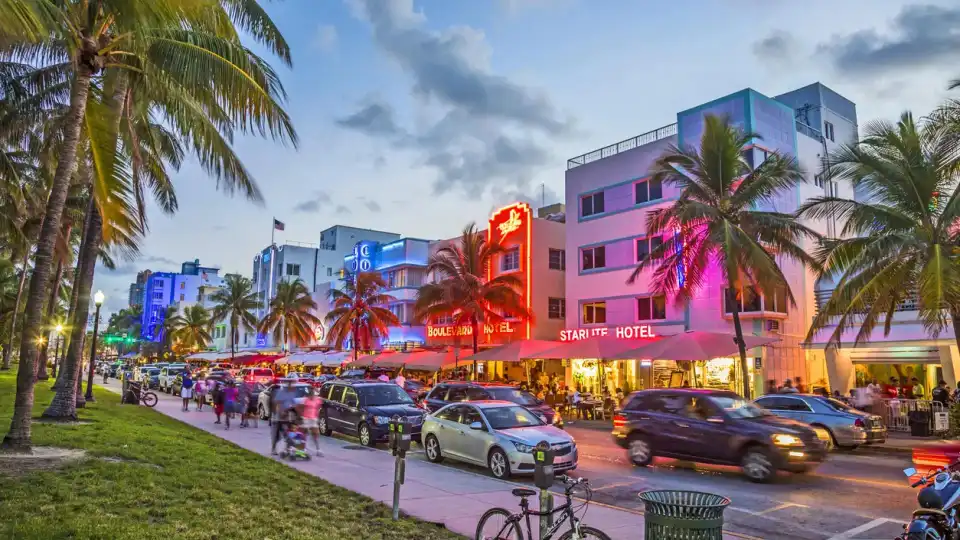
One of the most recognisable elements of Miami Beach is its Art Deco architecture.
The Art Deco Historic District in Miami Beach is particularly associated with pastel colours, geometric decoration, curved lines and distinctive hotel façades. The local visitor organisation describes the district as containing around 800 designated historic buildings, with examples of Art Deco, Mediterranean Revival and Miami Modern architecture.
Art Deco emerged as an influential architectural and decorative style during the early twentieth century. In Miami Beach, its local expression is often called Tropical Deco. Buildings can feature nautical details, pastel colours, geometric shapes and architectural elements designed to respond to the bright South Florida environment.
South Beach’s Ocean Drive is particularly famous for this combination of architecture, hotels, restaurants and nightlife. It is an environment where the buildings themselves contribute to the area’s identity.
GTA VI’s Ocean Beach invites a comparison with this real-world atmosphere. The official Rockstar material identifies Ocean Beach within its Vice City presentation, while the game’s broader visual language includes coastal streets, bright architecture and a distinctly warm-weather urban setting.
The similarities are compelling at the level of atmosphere and architectural language. However, that is not sufficient evidence to identify a particular Ocean Beach building as an exact replica of a hotel on Ocean Drive.
The distinction is worth preserving because architectural inspiration is often broader than copying a façade. A developer can borrow a combination of colour, building proportions, street layout, signage and coastal surroundings to create a place that feels familiar without reproducing a real address.
It is also important to remember that Miami Beach is not simply a decorative backdrop. Its Art Deco district is a real historic area, protected and recognised for its architectural character. Its appearance is the result of decades of development and preservation, not just a visual style chosen for tourists.
That gives the comparison another dimension. When players recognise the look of South Beach in a fictional environment, they are also responding to a real architectural history.
The Leonida Keys and the real Florida Keys
The Florida Keys may offer one of the strongest geographical comparisons in the entire article.
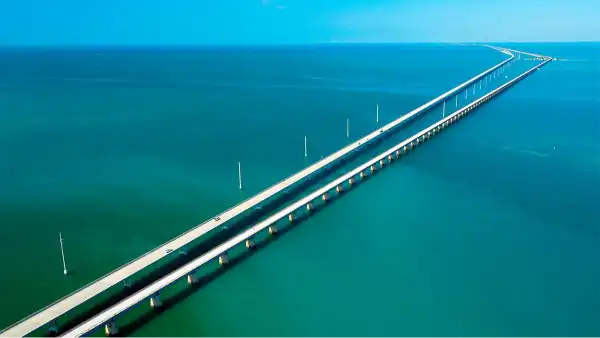
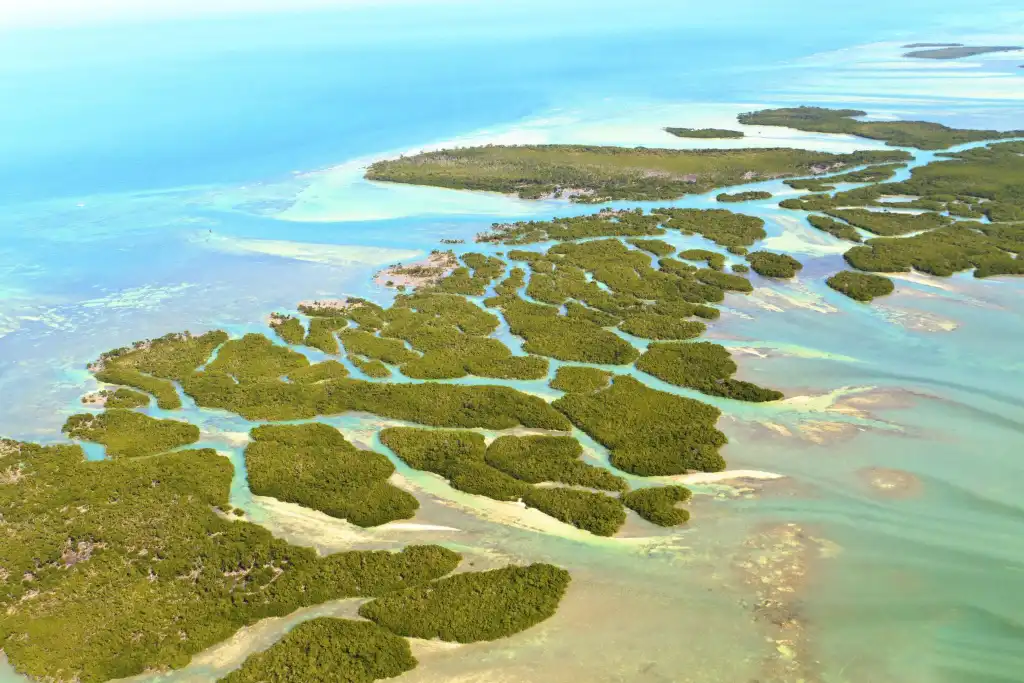
Unlike a conventional coastal town, the Florida Keys form an extended chain of islands stretching south-west from the Florida peninsula. Their relationship with the surrounding sea is central to the region’s identity. Communities are separated by water, and road travel depends on bridges connecting the islands.
This is what makes the Overseas Highway so distinctive.
The road connects the Florida Keys through a series of bridges and causeways, creating a journey in which the sea is constantly part of the landscape. The Seven Mile Bridge is one of its most recognisable features. The official Florida Keys visitor organisation describes the modern bridge as approximately 6.79 miles long, connecting Marathon with the Lower Keys.
There is also a historical dimension. The original Seven Mile Bridge was part of the Florida Keys Over-Sea Railroad, completed in 1912. The old bridge was later converted for road traffic, while a modern structure opened in 1982. The two bridges now stand alongside one another, reflecting different stages in the region’s transport history.
This is more than a convenient comparison with a fictional road. It helps explain what makes an island-chain environment distinctive.
The geography changes the experience of travelling through it. Instead of moving between inland towns on ordinary roads, drivers cross long stretches of water, pass small islands and encounter a landscape where the horizon is often dominated by sea and sky.
Rockstar’s official material names the Leonida Keys as one of the state’s major destinations. Its character biography for Jason Duval also places him in the Keys, where he works for local drug runners. That gives the region a narrative connection as well as a geographical one.
The comparison with the Florida Keys is therefore strong at a broad level: an island-chain setting, coastal communities and a landscape where bridges and water are central to the region’s identity.
What cannot yet be established is whether a specific fictional bridge reproduces the Seven Mile Bridge, or whether individual islands correspond to particular real-world keys. Rockstar has not confirmed a precise mapping.
The more interesting question is what this kind of geography can contribute to an open world.
An island chain naturally creates a different sense of movement from a continuous urban grid. Water becomes a visible boundary, bridges become important connections, and coastal settlements can feel separated even when they are linked by road.
That creates opportunities for environmental storytelling. A boatyard, a small marina, a roadside business or a house overlooking the water can communicate something about a community without requiring a lengthy explanation.
It also makes the region feel different from Vice City. The Keys are not simply another collection of streets. Their identity comes from the relationship between land, water and the communities built between them.
Grassrivers and the Everglades: Florida’s Wild Side
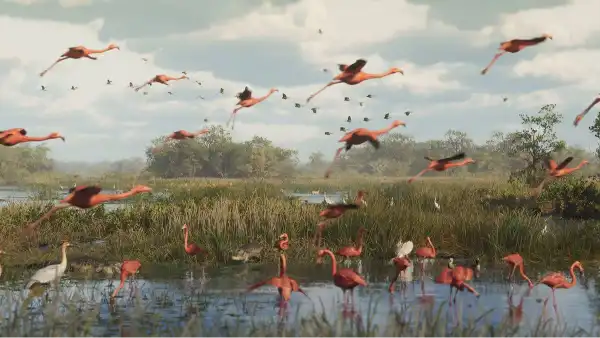
If Vice City represents the urban side of Leonida, Grassrivers offers an opportunity to explore one of Florida’s most distinctive natural environments.
The obvious real-world comparison is the Everglades. But understanding the connection requires looking beyond the popular image of an alligator sitting in a swamp.
The Everglades is a complex ecosystem. The National Park Service identifies several different habitats within the park, including hardwood hammocks, pine rocklands, freshwater marl prairies, freshwater sloughs, cypress environments, coastal lowlands and mangrove forests. It also contains marine and estuarine ecosystems.
That variety is important.
A freshwater slough, for example, is a low-lying wetland channel through which water moves. The National Park Service explains that these channels are among the main routes for water flow through the Everglades. Shark River Slough is also known as the River of Grass, a name that captures the slow-moving character of the landscape.
Mangroves add another layer. These salt-tolerant trees form coastal habitats that help support wildlife and contribute to the structure of the shoreline. They are not interchangeable with freshwater marshes: they belong to a different part of the wider ecological picture.
The South Florida Water Management District describes the Everglades as a mosaic of sawgrass marshes, freshwater ponds, prairies and forested uplands. It also explains that the historic ecosystem has been greatly reduced by drainage, agriculture, development and flood-control projects.
That history matters because the Everglades is not an untouched wilderness separate from human activity. Its present condition is closely connected to the way people have changed the region’s water systems and land use.
This is one of the most interesting ways to think about Grassrivers.
Rockstar’s official material identifies Grassrivers as a region of Leonida, but the existence of a fictional wetland does not establish that it is a literal recreation of Everglades National Park. The comparison is best understood environmentally: the real Everglades provides a strong reference for the kind of wetland landscape associated with South Florida.
That distinction also helps avoid a common mistake. Not every wetland is the same. A marsh, swamp, slough, mangrove forest and coastal estuary can all involve water and vegetation, but they are not identical environments.
For a game world, those differences can matter visually and atmospherically.
A wide sawgrass marsh creates a different sense of openness from a dense mangrove channel. A cypress-dominated wetland has a different appearance from a coastal estuary. A freshwater landscape and a saltwater environment support different forms of life.
These contrasts could help make Grassrivers feel like a region with its own identity rather than a generic green area on the map.
There is also a wider environmental storytelling opportunity. Natural landscapes can communicate the relationship between people and the environment around them. A road cutting through wetlands, a settlement near a waterway or a boat moving through a narrow channel can suggest how communities interact with the land.
I am particularly interested in how Rockstar uses the transition between urban and natural environments. If Vice City feels densely built-up, a journey into Grassrivers could offer a very different visual rhythm. The landscape itself may become the reason to explore.
That is the real value of the Everglades comparison: it encourages us to see Florida’s wetlands as a complex living environment, not merely a backdrop for wildlife encounters.
Port Gellhorn: A different side of Florida

Not every part of Florida is defined by the glamour associated with Miami Beach.
The state also contains smaller coastal communities, older tourist areas, roadside businesses and commercial streets that have developed around visitors travelling through the region.
These places can have a very different atmosphere from a major metropolitan destination. A hotel that once attracted holidaymakers may look dated beside newer developments. A roadside business may depend on passing traffic. A commercial strip can contain a mixture of local services, tourist shops and older buildings.
That contrast gives Port Gellhorn an interesting role within Leonida.
Rockstar identifies Port Gellhorn as one of the fictional state’s major destinations. Its inclusion suggests that the world extends beyond the bright, familiar image of Vice City.
The real-world comparison here is less specific than the Miami or Florida Keys connection. Florida has many coastal communities, and the visual language of ageing motels, roadside businesses and older tourist districts is not unique to one town.
It would therefore be misleading to declare that Port Gellhorn is a direct recreation of a particular Florida location without evidence from Rockstar.
Instead, I see the more useful comparison as thematic.
A fictional coastal town can represent a different relationship with tourism from a major destination such as Miami Beach. It can suggest a place where visitors still matter, but where the buildings and businesses do not necessarily have the same polished appearance.
This contrast can make a fictional state feel more believable. Real places are rarely uniform. A wealthy tourist district, a working community and an ageing commercial area can exist within the same wider region.
Port Gellhorn’s value may be precisely that it gives Leonida another social and visual texture. It does not need to represent one identifiable town to contribute to a convincing version of Florida.
Ambrosia: The agricultural and industrial side of Leonida

Florida’s identity is not only coastal. Agriculture is an important part of its economy, and sugarcane provides a particularly useful real-world connection for understanding the state’s industrial landscape.
The University of Florida’s Institute of Food and Agricultural Sciences describes Florida as the largest producer of sugarcane in the United States. Its crop profile explains that sugarcane is grown commercially in only a small number of US states and that Florida’s production is concentrated in the south of the state.
The same source records that Florida harvested more than 403,000 acres of sugarcane in 2021, producing over 17 million tons of cane. It also notes that the state’s sugarcane is processed at four mills in South Florida. These figures are historical data from the cited report, not a claim about current 2026 production.
This is a useful detail because it challenges the idea that Florida’s landscape is dominated entirely by beaches, hotels and wetlands.
Agricultural land and industrial facilities are part of the region too. Sugarcane production involves fields, transport, processing and the infrastructure needed to turn a crop into a commercial product.
Rockstar’s official presentation identifies Ambrosia as a region of Leonida. The game’s official visual material provides a basis for discussing its industrial and agricultural character, but it does not justify naming a particular real-world mill or factory as its definitive inspiration.
The broader Florida comparison is nevertheless meaningful.
Agricultural and industrial environments introduce a different visual vocabulary from the one associated with Miami. Fields create open, repetitive landscapes; processing facilities introduce machinery and large structures; roads and transport infrastructure connect production areas with other parts of the state.
There is also a social dimension. Agricultural regions are shaped by the work that takes place there, the businesses that support it and the communities connected to those industries.
That can help Leonida feel like a functioning place rather than a collection of tourist attractions.
Ambrosia’s importance may therefore lie in the way it broadens the fictional state’s identity. It reminds us that a Florida-inspired world needs more than palm trees and coastal roads to feel convincing.
Mount Kalaga: How much of Florida’s Natural Landscape can we recognise?

Mount Kalaga National Park is perhaps the most interesting region to approach with caution.
The name suggests a landscape with elevation, but Florida is not a mountainous state. The Florida Department of State lists the state’s highest natural point at just 345 feet above sea level.
That does not mean Florida lacks interesting natural landscapes. Its protected areas include forests, wetlands, pine habitats, coastal environments and other ecosystems. The Everglades alone demonstrates how varied South Florida’s natural environments can be.
Rockstar’s official material names Mount Kalaga National Park as one of Leonida’s destinations. However, the name alone does not establish that it represents a particular Florida park or that its elevation and terrain correspond to a real geographical feature.
This is where the fictional setting may be doing something more creative than reproducing Florida.
A game developer has to balance recognisable regional identity with the needs of an interesting open world. A fictional national park can combine forests, outdoor environments and dramatic scenery in ways that do not precisely match the real state’s topography.
It would be inaccurate to invent Florida mountains simply to make the comparison work. The real state’s relatively low elevation is a fact worth preserving.
A better comparison is with Florida’s broader protected natural areas and forest environments. The National Park Service’s Everglades habitat guide, for example, identifies pine rocklands and hardwood hammocks alongside wetland habitats. Those are examples of how varied Florida’s natural environments can be.
Mount Kalaga may ultimately prove to be a more freely imagined region, or its name may reflect a fictional geographical feature rather than a direct real-world counterpart. Until Rockstar provides more detail or the released game can be explored, the exact inspiration remains unknown.
That uncertainty does not make the region less interesting. It highlights the difference between inspiration and reproduction — a distinction that sits at the heart of this entire comparison.
There’s more to video games than what happens on screen. The Gaming Brief helps you discover the stories, places and ideas behind the games you love. Subscribe and stay connected.
Why Rockstar’s real-world references matter
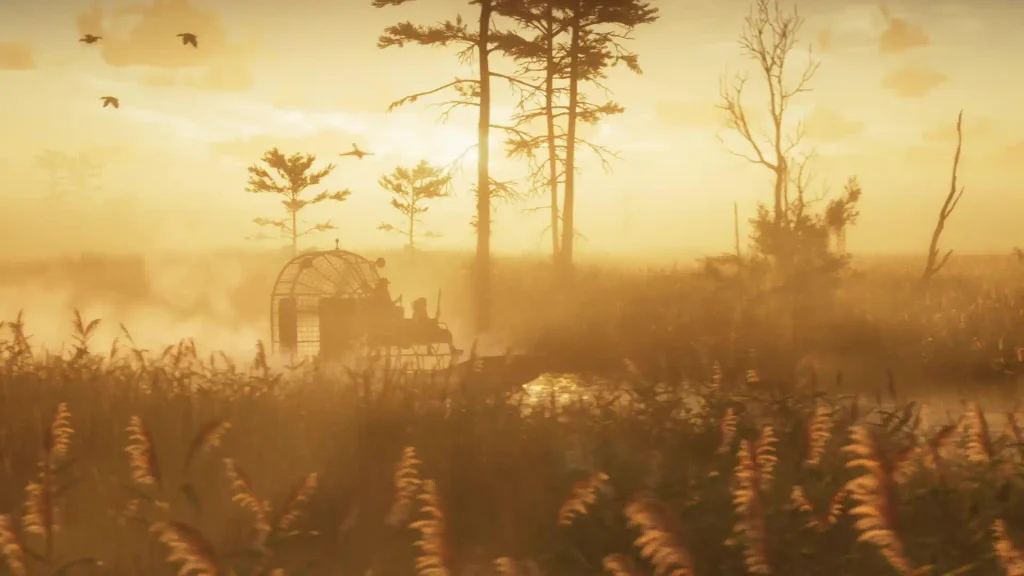
The strongest connection between Leonida and Florida is not a particular building or road. It is the variety of environments that gives the fictional state a sense of place.
A convincing open world needs more than attractive scenery. Its locations should feel as though they belong to the same wider region, while still giving players reasons to notice the differences between them.
Consider the contrast between Vice City and Grassrivers. One is associated with an urban environment; the other invites comparison with the wetlands and natural landscapes of South Florida. The journey between those kinds of environments can help create a sense of geographical change.
The same is true of the Leonida Keys. Their island-chain setting suggests a different kind of movement and relationship with the surrounding landscape from the streets of a major city.
These differences matter because geography can influence how players interpret a place.
A waterfront road feels different from an inland highway. A bridge across open water creates a different impression of distance from a road through a built-up neighbourhood. A dense urban street communicates a different kind of activity from an isolated stretch of wetland.
Even without confirmed details about every gameplay system, it is reasonable to say that these environments offer different visual and narrative possibilities.
There is also the question of environmental storytelling.
Architecture, vegetation, road signs, businesses and the layout of a community can communicate information without relying on dialogue. A visitor may recognise the atmosphere of a tourist district, while a player who has researched Florida’s history may notice more specific geographical or cultural references.
That is one of the things I find most interesting about connecting video games with the real world. The game can become a starting point for learning about subjects that might otherwise remain outside a player’s usual interests.
A player who recognises South Beach’s Art Deco architecture may become curious about its history. Someone who notices the wetlands of Grassrivers may want to understand the Everglades. A journey through the Leonida Keys could prompt questions about the Overseas Highway and the engineering history of the Florida Keys.
The real world adds context to the fictional one.
Grand Theft Auto also has a long tradition of using fictional locations to explore and exaggerate aspects of American life. Its settings are not neutral reproductions of real cities. They provide a framework for satire, social observation and storytelling.
That tradition makes the relationship between Leonida and Florida particularly interesting. The fictional state can draw on familiar places and cultural references while reshaping them to suit Rockstar’s own interpretation.
However, it is important not to attribute a specific satirical intention to a particular GTA VI location without evidence. The game’s full narrative and the context of its environments will need to be considered once players can experience them.
For now, the strongest observation is that the real-world references give Leonida a recognisable foundation. What Rockstar chooses to do with that foundation is part of what makes the setting worth exploring.
Leonida is not Florida: What Rockstar has changed

It is tempting to approach Leonida as though it were a simplified map of Florida. That would be a mistake.
A fictional game world is not required to follow the exact geography of its real-world inspiration. In fact, a direct reproduction would create its own problems.
Real cities have distances, road networks and neighbourhood layouts shaped by decades or centuries of development. A game world has to consider how players move through it, how locations connect and how the environment supports the story.
This can lead developers to compress areas, alter distances, move landmarks or combine features from several real places.
It also means that two locations can look similar without having a direct geographical relationship.
The comparison between Ocean Beach and South Beach is a good example. The architectural and coastal similarities are meaningful, but they do not prove that Rockstar copied a particular hotel or street.
The same principle applies to the Florida Keys. The real island chain provides a strong geographical reference for the Leonida Keys, but that does not establish that every fictional island has a real-world equivalent.
And the Everglades is a useful ecological comparison for Grassrivers, but the fictional region should not be treated as a precise recreation of the national park.
The distinction is particularly important when discussing community-made maps. Fan projects can be valuable research tools, especially when they compare screenshots and attempt to identify possible locations. But their conclusions remain community interpretations unless Rockstar confirms them or reliable evidence independently establishes the connection.
A visual match is a lead, not proof.
The most accurate way to describe Leonida is as a fictional state with a strong Florida identity. Its regions draw on recognisable real-world environments, but Rockstar remains free to combine, exaggerate and reinterpret those references.
That creative freedom is not a weakness. It is what allows the setting to become its own place.
The real Florida behind GTA 6: What we still want to discover
With GTA VI scheduled to launch on 19 November 2026, there are still questions that cannot be answered through promotional material alone.
The official trailers, screenshots and regional descriptions provide a substantial introduction to Leonida. They do not, however, reveal every detail of the finished game world.
There are several things I would particularly like to investigate after launch.
How closely do the different regions connect?
The relationship between Vice City, the Leonida Keys, Grassrivers and the other regions will help determine whether Leonida feels like a connected state or a collection of separate environments.
How does the landscape change between regions?
The transition from city streets to coastal roads, wetlands and rural environments could be one of the most important elements of the game’s sense of place.
How much geographical detail can players recognise?
The released game may reveal additional visual references to real Florida, from architectural styles and vegetation to road design and local environments.
How does Rockstar use the natural environment?
The wetlands, islands and other landscapes may have a role beyond providing scenery. The way the player encounters them could help establish their importance to the fictional state.
Are there more specific real-world references to discover?
This is where careful research will be especially important. It will be tempting to identify every building or road with a real-world counterpart, but those claims should be made only when the evidence is convincing.
These are questions for the released game, not conclusions that can be drawn from promotional material. I would rather leave them open than pretend to know details that have not yet been verified.
When a video game becomes a window into the real world
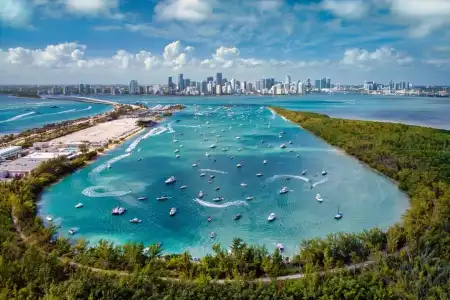
Leonida is interesting because it appears to draw on several different sides of Florida rather than relying on one familiar image of the state.
Vice City and Ocean Beach invite comparisons with Miami and South Beach. The Leonida Keys bring to mind the island geography of the Florida Keys. Grassrivers creates an opportunity to understand the wetlands of the Everglades, while Ambrosia and Port Gellhorn suggest environments beyond the state’s best-known tourist destinations.
Mount Kalaga is a reminder that Rockstar can also take creative liberties, using a fictional national park to expand the world beyond the limits of Florida’s actual topography.
The most valuable comparisons are not necessarily the ones that identify an exact building or street. They are the ones that help us understand why a place feels recognisable.
Real geography, architecture, ecosystems and communities can give a fictional setting a foundation that players instinctively understand. Yet the developer’s interpretation is what transforms those references into a world of its own.
That is why I find the relationship between GTA VI and Florida so fascinating. Leonida does not need to be an exact copy of the real state to encourage us to learn about it.
Perhaps the best thing a video game can do is make us curious about somewhere we have never visited — and make us look at the real world a little differently when we do.
What real-world Florida location are you most interested in recognising in GTA VI: Miami, the Florida Keys, the Everglades or somewhere else entirely?
Want more stories that connect video games with the real world? Subscribe to The Gaming Brief — your daily connection to the world of video games.