

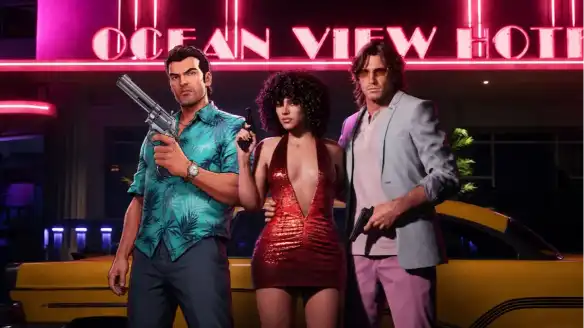
GTA VI is bringing players back to Vice City, but its biggest opportunity may lie beyond nostalgia. With Leonida providing a wider setting, Rockstar has the chance to explore what makes an open world feel like a real place rather than simply a map filled with activities.
There are cities in videogames that players remember long after completing the story. Not necessarily because they were the biggest, or because they offered the most missions, but because they had an identity. Their streets, buildings, atmosphere and inhabitants created somewhere that felt worth exploring.
Vice City is one of those places.
When Rockstar Games returns to its fictional Florida-inspired setting in Grand Theft Auto VI, it is revisiting a location with an established place in gaming history. However, this is not simply an opportunity to recreate familiar streets with modern graphics. GTA VI introduces a new interpretation of Vice City within the wider state of Leonida, giving Rockstar an opportunity to explore a much broader world.
That raises a more interesting question than how large the map might be: what actually makes an open-world game feel alive, and could GTA VI influence what players expect from the genre?
The answer will depend on the finished experience. Before launch, however, Rockstar’s official material already gives us a starting point for examining the ideas behind this new world.

Why Vice City still matters
Vice City first arrived in Grand Theft Auto: Vice City, released in 2002. Its setting, inspired by the visual identity of 1980s Miami, helped give the game a personality that distinguished it from other entries in the series.
Rockstar’s own description of the original game emphasised the contrast between beaches, swamps, glamour and less affluent neighbourhoods. It presented Vice City as an urban environment with a distinctive atmosphere, rather than simply a collection of roads connecting missions.
That identity is important because returning to a familiar location creates expectations.
Long-time fans may recognise the name, the visual references and the broader personality associated with Vice City. New players, meanwhile, will encounter a version of the setting designed for a different generation of hardware and a new story.
But nostalgia can only take a game so far.
A successful return needs to make the familiar feel interesting again. Reusing recognisable imagery is not enough if the city does not have its own character, or if its locations feel like decorative backgrounds.
The challenge for GTA VI is therefore not simply to remind players why they liked Vice City. It is to give them new reasons to care about it.

From Vice City to Leonida: A world bigger than one city
One of the most important aspects of GTA VI’s setting is that Vice City is not presented as the entire world.
Rockstar describes the game as taking place in Leonida, with Vice City forming part of a wider fictional state. Its official material also introduces locations beyond the city, including Port Gellhorn, Ambrosia and Mount Kalaga.
This matters because geographical variety can give an open world a stronger sense of identity.
A city and a rural area do not communicate the same things. Streets, architecture, businesses, roads, vegetation and the way people occupy a location can all contribute to its personality. Moving between different environments can make a fictional setting feel more complete, provided those environments belong to the same coherent world.
A large map alone cannot achieve that.
A game could contain hundreds of square kilometres and still feel empty if its locations lack meaningful differences. Equally, a smaller environment can be memorable if its spaces are carefully designed and give players reasons to explore.
This is why the relationship between Vice City and the wider Leonida setting is more interesting than an unverified estimate of map size.
The official launch gallery, published on 5 November, provides additional views of Vice City and locations beyond it. These images allow us to discuss the visual variety Rockstar is presenting, although they cannot establish the full extent of the playable world.
The real test will be how these environments connect. Do they feel like different parts of one believable place? Do they create distinct atmospheres? Do they encourage players to explore for reasons beyond reaching the next mission?
Those are the questions that matter.
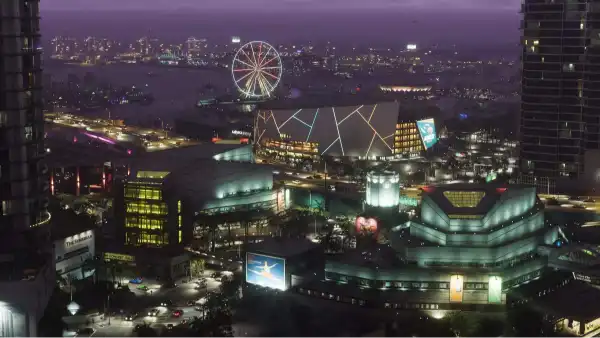
What actually makes an open world feel alive?
An open world can look impressive and still feel lifeless.
Beautiful buildings, realistic lighting and detailed landscapes are valuable, but they do not automatically create an engaging environment. A convincing world needs to suggest that something exists beyond the player’s immediate objective.
There are several elements that help achieve this.
1. A world with its own identity
A memorable location should be recognisable without relying entirely on a map marker.
Architecture, street layouts, vegetation, signs, public spaces, businesses and environmental details all contribute to a place’s identity. Players should be able to distinguish one neighbourhood from another through what they see and experience.
This is one reason Vice City has remained recognisable. Its identity was established through a particular combination of visual style, setting and atmosphere.
For GTA VI, the opportunity is to create a new identity that feels connected to the original concept without being trapped by it.
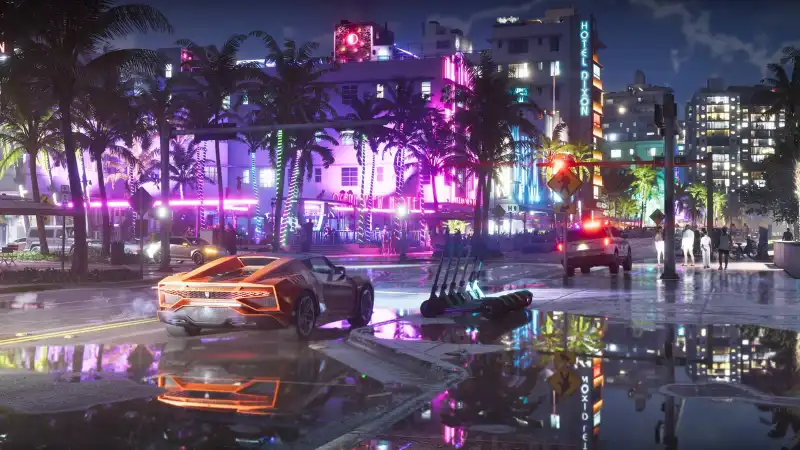
2. Environments that tell stories
Environmental storytelling is the process of communicating information through the world itself rather than relying exclusively on dialogue or cutscenes.
A neglected building, a crowded public space, a carefully arranged room or the remains of an activity can suggest something about the people who inhabit that location.
The player might discover a story simply by paying attention.
This approach makes exploration more rewarding because the environment becomes part of the narrative. It also allows players to form their own interpretations instead of receiving every detail through direct explanation.
However, it only works when environmental details are meaningful. Random objects scattered around a location do not automatically create storytelling.

3. People who make locations feel inhabited
A city needs more than buildings.
People are part of what gives a location its personality. Their presence, routines, conversations and relationships with their surroundings can make a street feel different from an empty collection of structures.
Rockstar has previously discussed this ambition in relation to Red Dead Redemption 2. In an interview with Games Radar, Rockstar art director Aaron Garbut described the importance of the sense of life created by townspeople going about their activities and by unexpected discoveries in the environment.
That is a useful design principle, but it is not confirmation of how GTA VI’s inhabitants will behave.
For the new game, players will need to discover the depth and consistency of its world themselves. Promotional footage may suggest a busy environment, but it cannot demonstrate every interaction or system.

4. Sound and atmosphere
A location is experienced through more than its appearance.
Music, ambient noise, traffic, conversations and environmental sounds can all help establish a sense of place. A quiet street at night communicates something different from a busy commercial area during the day.
Sound can also help connect locations. A player travelling through a fictional state should be able to recognise changes in atmosphere as the surroundings evolve.
Rockstar‘s official GTA VI music material already presents a varied musical identity, including different radio stations and musical styles associated with Leonida. That is evidence of the importance being given to the game’s audio identity, although the full experience will only be clear after release.

5. Freedom with a sense of purpose
An open world should allow players to make decisions about where to go and what to do. But freedom becomes less meaningful when the world offers no interesting reasons to use it.
The strongest environments balance choice with discovery.
Players might leave a main objective because something in the distance catches their attention. They might explore a location because its appearance suggests a story. They might simply enjoy travelling through an environment that feels convincing.
That balance is difficult to achieve. A world can be packed with activities and still feel repetitive, while a carefully designed location can remain interesting without constantly demanding the player’s attention.
This is where good world design becomes more than a question of quantity.
The Gaming Brief is my newsletter for readers who want to stay connected to video games, from major releases to interesting stories and industry developments. If this kind of analysis interests you, subscribe to The Gaming Brief.

How GTA VI could push open-world design forward
GTA VI has an opportunity to influence the genre, but that influence should not be assumed in advance. The more useful approach is to consider the design challenges it could address.
Environmental immersion
Rockstar’s official material presents Leonida as a setting with different locations and a distinctive visual identity. If the finished game connects these environments convincingly, it could reinforce the importance of designing places that feel individual rather than interchangeable.
That does not require every street to contain a hidden activity. Sometimes the value of a location is simply that it feels believable and contributes to the wider atmosphere.
More connected world-building
A convincing open world should feel like a coherent place rather than a series of unrelated environments.
The relationship between Vice City and the wider state of Leonida creates an opportunity to explore this idea. Different locations can have their own character while still belonging to a shared fictional setting.
The challenge is consistency. The world should feel as though its locations belong together, even when they look and feel very different.
Storytelling through the environment
The world can help communicate the story without constantly interrupting the player.
Architecture, local businesses, public spaces and the condition of buildings can all contribute to the identity of a location. They can also suggest social differences and histories that are not necessarily explained through dialogue.
GTA VI’s promotional material gives us a visual introduction to Leonida, but it is too early to establish how deeply environmental storytelling will be integrated into the finished game.
That distinction matters. An interesting possibility is not the same thing as a confirmed feature.
Jason, Lucia and the world around them
Jason Duval and Lucia Caminos are at the centre of GTA VI’s story. Rockstar’s official character descriptions establish aspects of their backgrounds and explain that their lives become connected through a criminal conspiracy across Leonida.
Their relationship creates an opportunity to connect personal storytelling with the wider setting.
A world becomes more meaningful when its locations matter to the characters who inhabit it. The places they visit, the people they encounter and the circumstances surrounding them can give the environment a narrative purpose.
However, we should not assume how this relationship will affect player choice or gameplay systems until those details are demonstrated.

Player expectations
The attention surrounding GTA VI may influence how players judge future open-world releases.
When a major game receives this level of attention, players naturally begin asking what other developers could learn from it. They may expect more distinctive environments, stronger atmosphere and a closer relationship between world design and storytelling.
That does not mean every future open-world game should imitate Rockstar.
Different genres have different priorities. A fantasy adventure, a science-fiction role-playing game and a crime-focused action game do not need identical systems to create compelling worlds.
The more useful lesson would be to understand why certain design decisions work, rather than simply copying their appearance.
Technical ambition and creative design
Modern hardware can support increasingly detailed environments, but technical improvements are only valuable when they serve the experience.
Better lighting, more detailed models and greater visual complexity can make a location more convincing. Yet they cannot compensate for weak exploration, repetitive activities or environments that lack personality.
The most important question is not how realistic a game looks. It is whether its visual and technical systems help create a world that players want to inhabit.
That is a much higher standard than graphical spectacle alone.
GTA VI compared with other open-world games
GTA VI is entering a genre with several established examples of different approaches to world design. Comparing them is useful because it helps explain what makes each experience distinctive.
Red Dead Redemption 2: The importance of atmosphere
Red Dead Redemption 2 demonstrates how atmosphere and environmental detail can contribute to a convincing world.
Its landscapes, settlements and wildlife help establish the feeling of travelling through a particular time and place. Rockstar’s developers have discussed the importance of creating a world that feels inhabited and cohesive, rather than simply providing a large area for missions.
The relevant comparison for GTA VI is not that a modern city should behave like a frontier environment. It is that locations need an identity and a sense of continuity.

Cyberpunk 2077: A city with a distinctive personality
Cyberpunk 2077 offers another useful example through Night City.
CD PROJEKT RED presents the city as a central part of the experience, with locations, people and the player’s choices contributing to its identity. Its official description emphasises the freedom to decide where to go, when to travel and how to approach the world.
The lesson is that a fictional city can become more than a backdrop. It can be one of the defining elements of the game.
GTA VI has a similar opportunity with Vice City, although its final execution must be judged independently.

Grand Theft Auto V: The evolution of Rockstar’s approach
Grand Theft Auto V remains an important reference point because it established a version of Los Santos that players could explore across a range of urban and less urban environments.
GTA VI does not need to repeat that structure to build on its predecessor. Instead, the question is how Rockstar can develop its approach to atmosphere, location design and storytelling while giving Leonida its own identity.
The new game should be judged on what it achieves, not simply on whether it is larger or more detailed than GTA V.

The risk of expectations: Can GTA VI live up to the hype?
The anticipation surrounding GTA VI creates an unusual challenge.
When a game becomes one of the most discussed releases in the industry, expectations can become difficult to manage. Every trailer, screenshot and announcement becomes material for speculation.
That can create an unrealistic standard before players have experienced the finished product.
There is also a difference between what promotional material shows and what a game allows players to do. A screenshot can demonstrate visual detail. A trailer can introduce characters and locations. Neither can independently prove how an open world behaves during extended play.
The size of a map is not proof of quality. A busy street is not proof of convincing civilian behaviour. A beautiful landscape is not proof that exploration will remain interesting.
GTA VI may deliver an outstanding open-world experience, but it should be evaluated through the finished game rather than assumptions built around its marketing.
That is not criticism of Rockstar. It is simply a fair standard for any major release.
What the future of open-world gaming could look like
The future of open-world gaming should not be reduced to bigger maps or more detailed graphics.
The genre has room to develop in several directions.
Developers can create more distinctive environments, where individual locations communicate their own history and personality. They can make exploration more rewarding by giving players reasons to pay attention to the world around them. They can also connect narrative and environment more closely, allowing places to contribute to the story rather than simply host it.
There is another important consideration: freedom needs purpose.
A world filled with icons and activities may offer plenty to do, but that does not automatically make it memorable. Sometimes the most rewarding moments are the ones that happen because players decide to explore without being instructed to do so.
Different games will approach this challenge in different ways. Not every open world needs the same scale, tone or level of simulation.
GTA VI‘s potential significance lies in how it handles these principles within its own identity. If it creates a world that players remember as a place, rather than just a sequence of objectives, it could provide an important example for the genre.
And that is a more meaningful ambition than simply trying to build the biggest map.
Final verdict: Vice City has something to prove
Vice City already has a place in Grand Theft Auto history. Its return gives Rockstar an opportunity to introduce that identity to a new generation while creating a setting that feels distinct from its previous games.
But the real opportunity extends beyond nostalgia.
GTA VI could contribute to the future of open-world gaming if its finished experience brings together convincing locations, memorable atmosphere, environmental storytelling and meaningful freedom. Those are the qualities that can turn a virtual map into somewhere players genuinely want to spend time.
For now, that remains a possibility rather than a verdict. The trailers and official screenshots give us a glimpse of Leonida, but the quality of its world will ultimately be determined by playing it.
I believe that is what makes this return to Vice City interesting. The challenge is not simply to make the city look impressive. It is to make it matter.
What matters most to you in an open-world game: a massive map, a believable world, meaningful exploration or the freedom to create your own stories?
Ace Play Gaming is an independent video game publication and is not affiliated with, endorsed by or sponsored by Rockstar Games or Take-Two Interactive.